SPECIES & CARE
White-bellied Caique
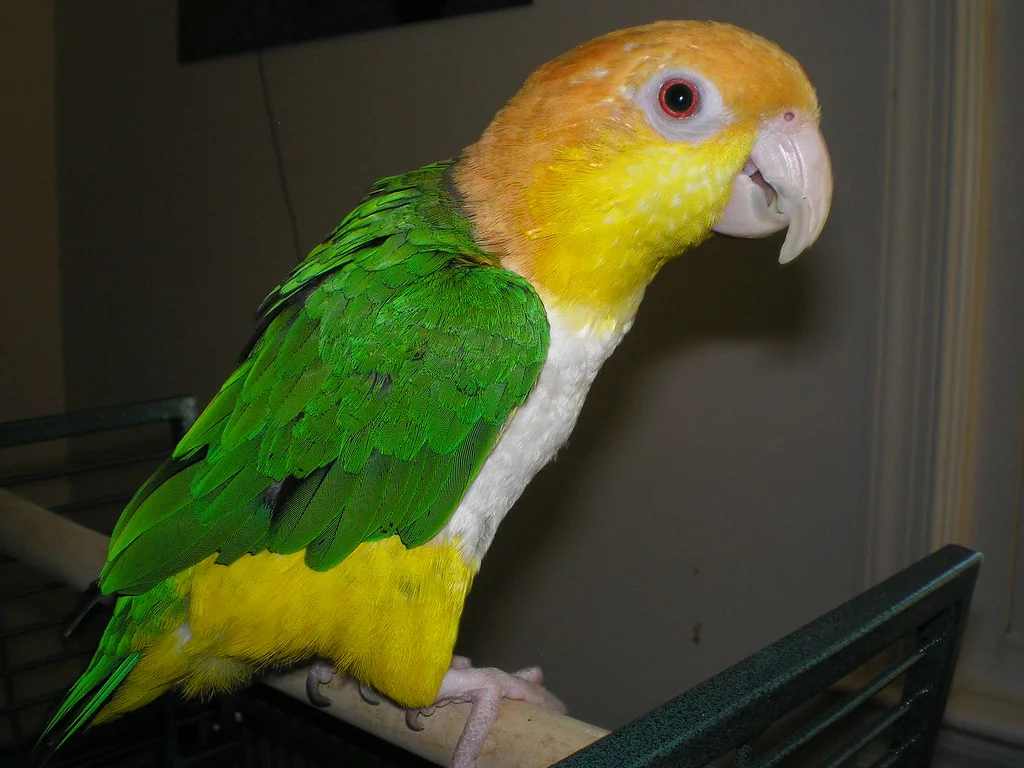
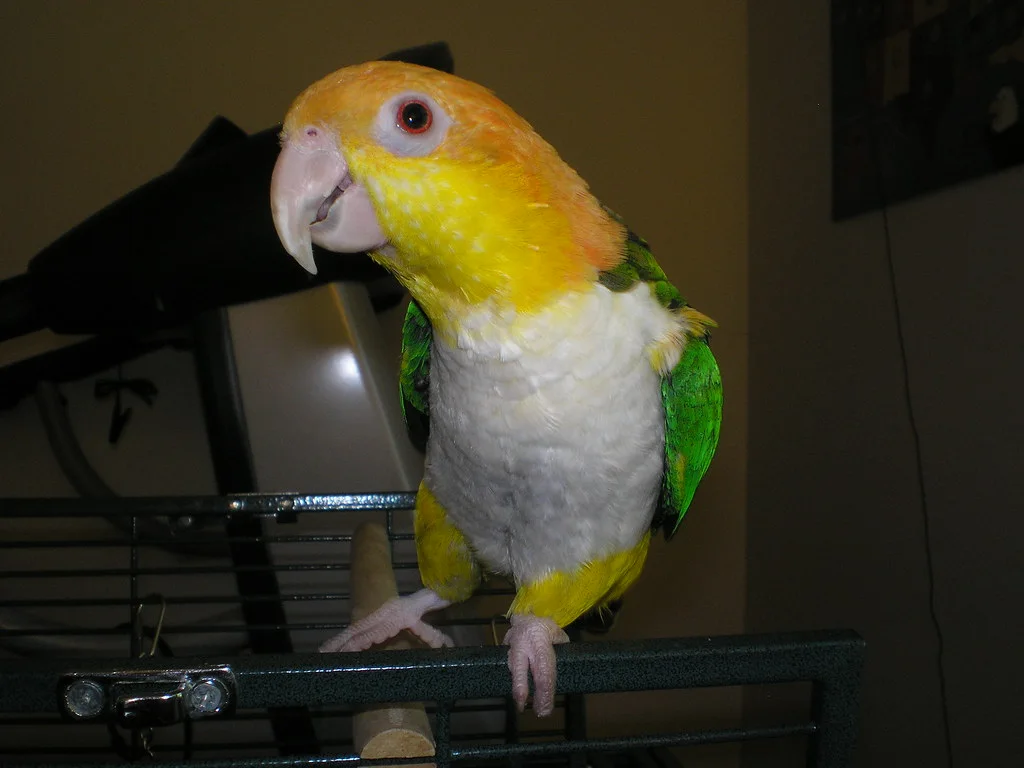
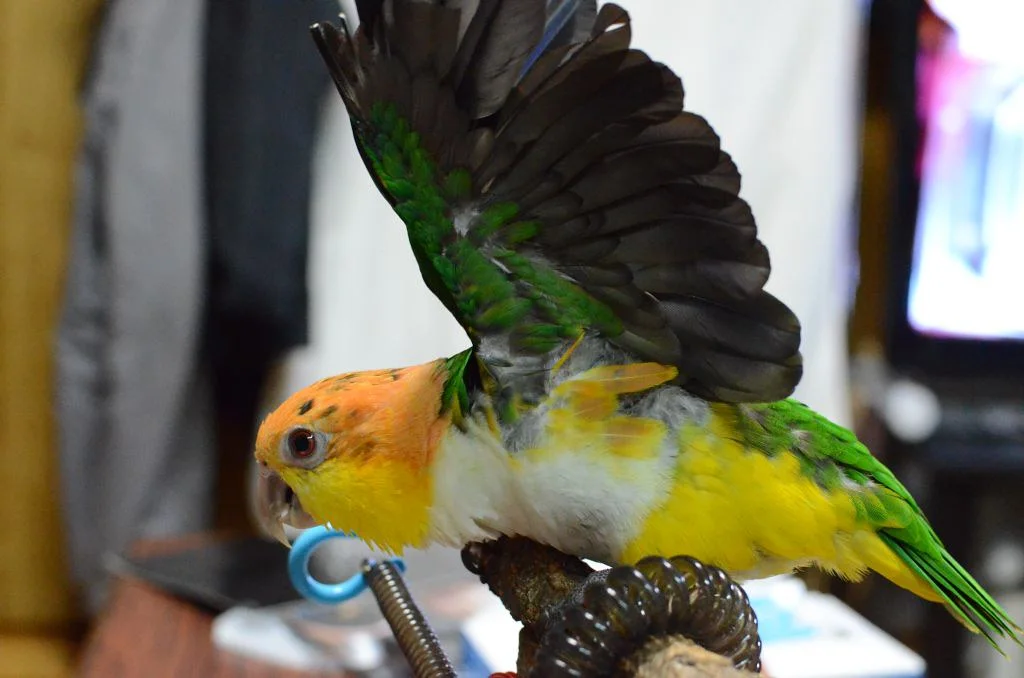
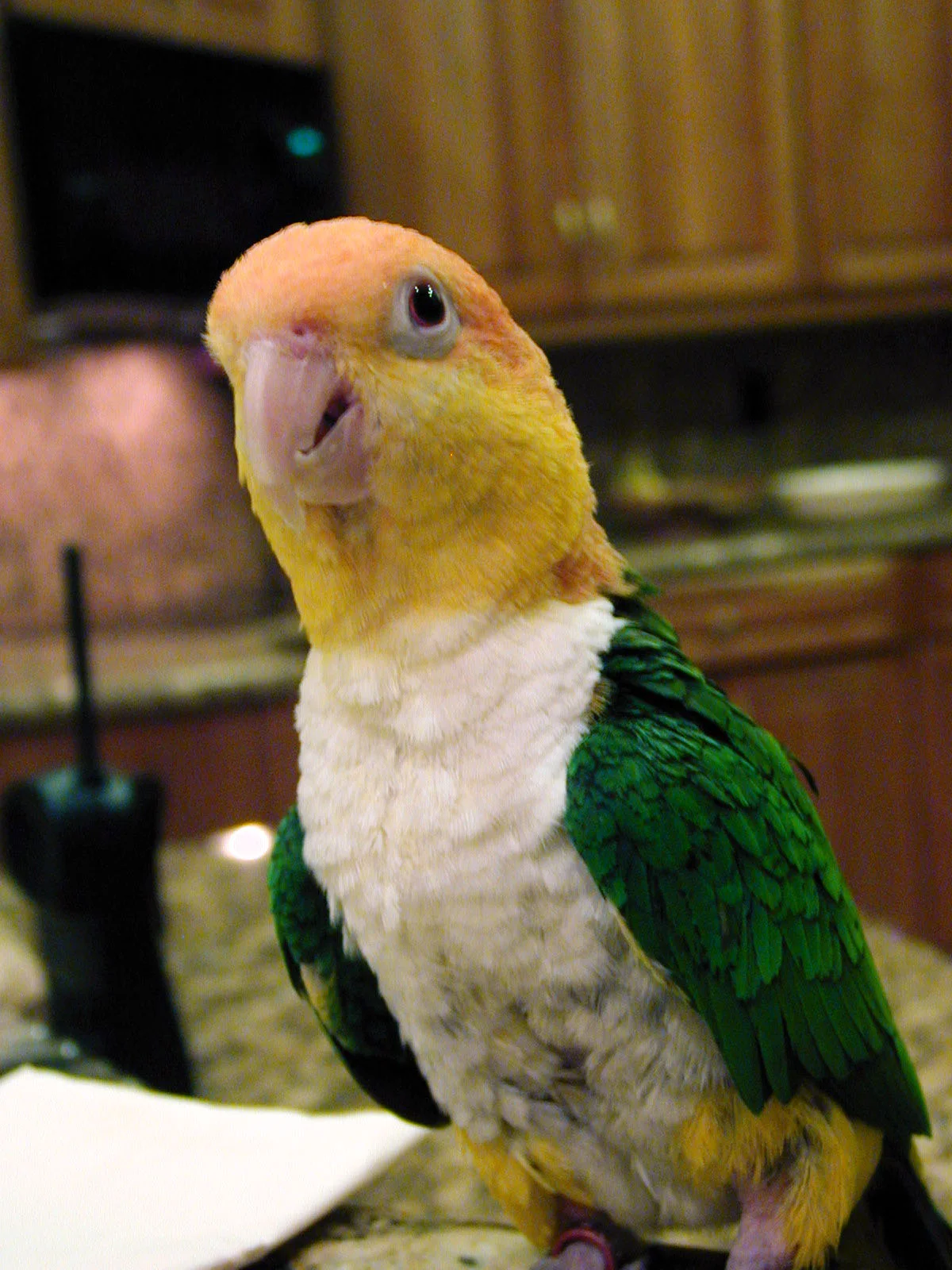
The White-bellied Caique is a compact, energetic parrot with a pale belly, orange head and green wings. It needs generous opportunities for safe movement and discovery, balanced by calm routines and respect for individual boundaries.
Overview and appearance
White-bellied Caiques have a white chest and belly, orange-yellow head and green upperparts. The name includes related regional forms and taxonomic treatments may differ between sources. The bird described here is Pionites leucogaster, a South American parrot with a compact, sturdy build.
Caiques are active birds that use feet and beak to investigate their surroundings. In a home, they need appropriate climbing and play opportunities, food-searching and safe objects to manipulate. Their small size does not remove the need for a carefully prepared environment.
Personality and social needs
White-bellied Caiques are often lively, playful and inquisitive, but a species profile cannot predict the temperament of an individual. Some may enjoy physical games while others prefer observation or a slower approach. Let the bird’s signals guide contact and avoid rewarding rough play with hands.
Plan regular interaction as well as independent activities, quiet rest and routine. Caiques can be very busy, so predictable boundaries help make household life safer. Any time near children or other animals should be carefully supervised, with secure separate spaces available.
Typical adult size
A White-bellied Caique is generally about 23 cm long and may weigh around 130–170 g. Individual measurements vary. Choose suitable bar spacing and ensure the enclosure is still large enough for climbing, movement and perches. Regular supervised exercise outside the cage is important for activity and exploration.
Expected lifespan and long-term care
A caique can be a commitment of several decades, although published lifespan ranges vary. Consider long-term housing and care and identify someone who could help if circumstances change. A small parrot is not necessarily a short-term commitment.
Talking and vocalisation
Caiques communicate with calls and other vocal sounds; volume and frequency vary between birds. They should not be selected on the assumption that a smaller parrot is quiet. Some may copy sounds, but talking is neither a dependable trait nor the measure of a good companion.
Intelligence and reward-based training
Positive-reinforcement training offers both structure and mental exercise. Introduce short activities such as target following, waiting on a perch and entering a carrier. Provide foraging tasks and safe toys that encourage problem-solving. Clear routines and calm redirection are preferable to punishment or forced handling.
Diet and nutrition
A balanced menu uses suitable formulated food and a range of fresh vegetables, with fruit and richer treats offered thoughtfully. Avoid relying on seed mixes as the main food. An avian veterinarian can review the bird’s current diet and body condition and guide any transition; avoid supplements without specific professional direction.
Housing, exercise and enrichment
Create a secure home with varied perches, safe climbing and suitable chew materials. Rotate enrichment to sustain interest and offer supervised activity in a bird-proofed area. Check small toys and attachment points frequently, since busy birds can damage materials as they explore.
Suitability and questions before asking
A White-bellied Caique may suit people ready for an energetic, hands-on parrot that needs daily activity and careful supervision. It is not ideal for someone seeking an especially quiet or low-interaction pet. Families should provide calm adult-led interaction and let the bird withdraw when it has had enough.
Ask about the particular bird’s age, routine, diet, play and handling preferences. Think through exercise arrangements, household supervision and long-term care. Confirm current individual availability with the seller; this educational profile does not indicate stock.
CURRENT BIRDS · DETAILS BY ENQUIRY
Ask which White-bellied Caique birds are available
Is a White-bellied Caique currently available, and what can you tell me about its daily routine and preferred activities?